Electric vehicle chargers in Canada fall into three broad categories defined by the power level they deliver. Understanding the distinction matters because it directly affects how long a charge takes, what electrical infrastructure is required, and which locations in a typical day provide useful charging opportunities.
Level 1 Charging
Level 1 refers to charging from a standard 120-volt household outlet, the same type used for most appliances. No dedicated equipment beyond the cord that ships with most EVs is needed. The main limitation is speed: a Level 1 connection typically adds 6 to 8 kilometres of range per hour of charging, depending on the vehicle’s onboard charger capacity.
For drivers who travel fewer than 60 kilometres daily and can leave the vehicle plugged in overnight, Level 1 is adequate. It remains common in older apartment buildings and rental properties where landlords have not yet upgraded electrical systems. Natural Resources Canada notes Level 1 as a practical option where installing a dedicated circuit is not feasible.
- Voltage: 120V AC (standard North American outlet)
- Power output: approximately 1.2 to 1.9 kW
- Estimated range added per hour: 6–8 km
- Connector type: J1772 (NEMA 5-15 plug to vehicle side)
- Installation: no dedicated equipment required
Level 2 Charging
Level 2 uses a 240-volt circuit, the same voltage as an electric dryer or range. It requires either a hardwired wall unit or a NEMA 14-50 outlet with a compatible cord. Charge rates vary from roughly 7 kW to 19 kW depending on the EVSE unit and the vehicle’s onboard charger limit. Most passenger EVs accept up to 7.2 kW or 11 kW on Level 2.
At 7.2 kW, a 60 kWh battery gains roughly 40–45 km of range per hour. A full overnight charge for most long-range EVs is achievable. Level 2 is the dominant standard for residential installations, workplace charging, and public destination charging at hotels, parking garages, and shopping centres across Canada.
The connector standard for Level 2 AC charging in Canada is the SAE J1772 (also called J plug or Type 1). This plug is used by all non-Tesla passenger EVs sold in Canada. Tesla vehicles use a proprietary connector but ship with a J1772 adapter.
- Voltage: 240V AC
- Power output: 3.3 kW to 19.2 kW (most residential units: 7.2 kW)
- Estimated range added per hour: 25–60 km
- Connector type: SAE J1772 (Type 1)
- Installation: dedicated 240V circuit required; permit typically required
DC Fast Charging
DC fast chargers (also called Level 3) bypass the vehicle’s onboard AC charger and deliver direct current straight to the battery pack. This allows far higher power levels—from 50 kW at older stations up to 350 kW at newer high-power units. A 20-to-80-percent charge on a 60 kWh battery at a 50 kW station takes roughly 40–50 minutes.
Three connector standards are in active use in Canada for DC fast charging:
- CCS Combo 1 (SAE J1772 + DC pins): The dominant standard for non-Tesla North American EVs. Most new charging infrastructure in Canada supports CCS. It is mandated for ZEVIP-funded stations.
- CHAdeMO: A Japanese standard used on older Nissan LEAF models and some Mitsubishi vehicles. Less common in new installations; the Nissan LEAF 2023+ (in Canada) still supports it.
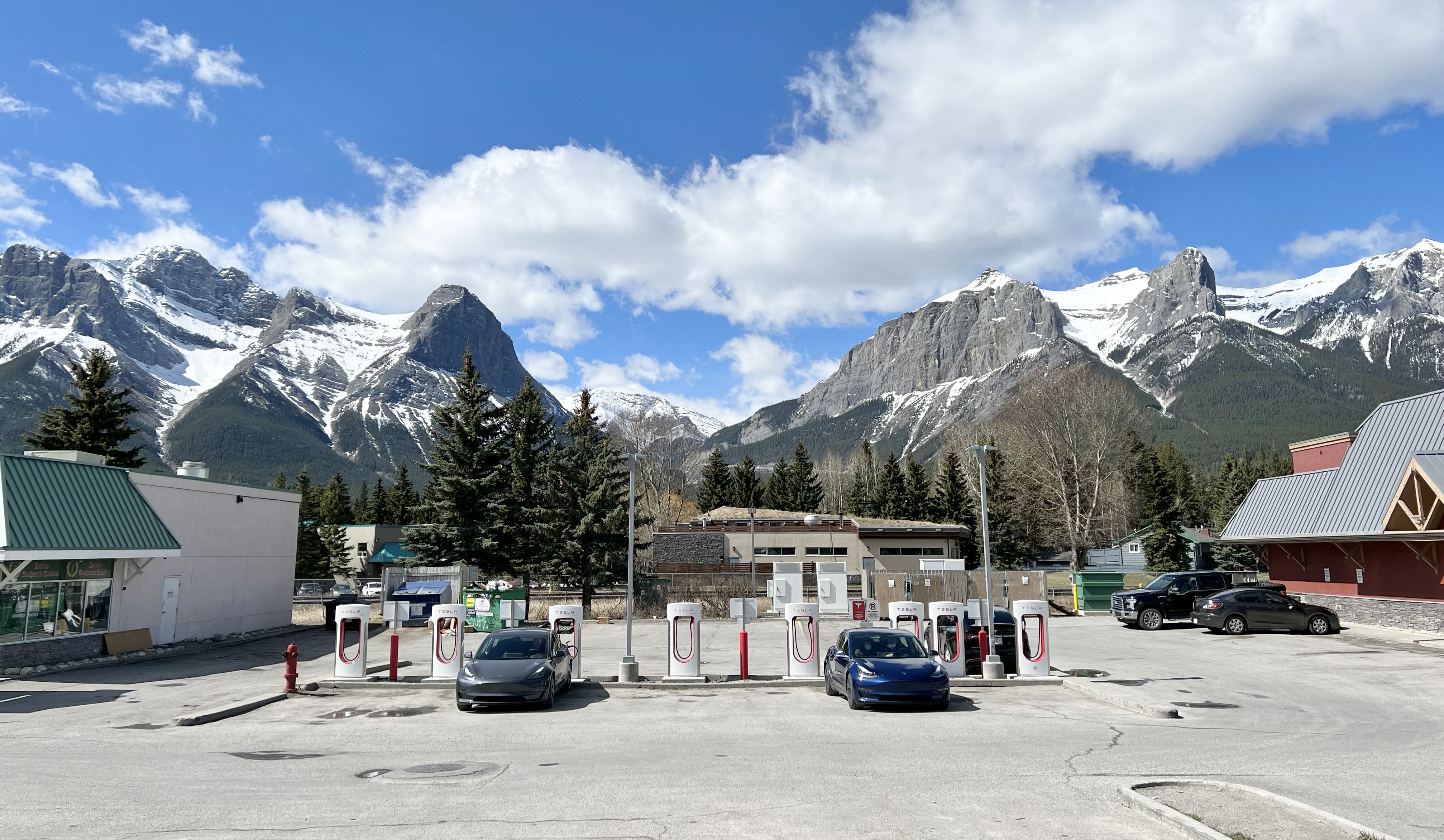
- Tesla NACS (now SAE J3400): Tesla’s proprietary connector, now released as an open standard. Ford, GM, and several other manufacturers announced North American adoption beginning in 2024–2025. Adapters for Tesla’s Supercharger network are available to non-Tesla vehicles where NACS ports are fitted.

Comparison by Charging Level
| Level | Voltage | Typical Power | Range / Hour | Connector (Canada) | Common Location |
|---|---|---|---|---|---|
| Level 1 | 120V AC | 1.2–1.9 kW | 6–8 km | J1772 (NEMA 5-15) | Home (existing outlet) |
| Level 2 | 240V AC | 3.3–19.2 kW | 25–60 km | SAE J1772 | Home, workplace, parking |
| DC Fast | 400–800V DC | 50–350 kW | 200–800 km | CCS1 / CHAdeMO / NACS | Highway corridors, retail |
Why Connector Standards Matter for Canadian Drivers
Connector compatibility determines which public stations a given vehicle can use without an adapter. Most new passenger EVs sold in Canada since 2022 support CCS Combo 1 for DC fast charging and J1772 for Level 2. Older Nissan LEAF owners with CHAdeMO may find fewer compatible DC fast chargers as networks shift investment toward CCS and NACS.
The Transport Canada EV infrastructure guidance recommends confirming connector compatibility before planning long-distance routes using public fast charging networks.
Network Coverage by Connector Type
FLO (formerly AddEnergie), ChargePoint, and Petro-Canada Electrify maintain national CCS-capable fast charging corridors. BC Hydro’s EV charging network in British Columbia offers CCS and CHAdeMO at highway stations. Hydro-Québec’s Circuit Électrique covers Level 2 extensively throughout Quebec with DC fast charging at major stops.
Tesla Superchargers, historically exclusive to Tesla vehicles, began opening to other brands in Canada in 2023 via adapter programs. The transition to NACS as a broader standard means future vehicles from multiple manufacturers will be able to use these stations natively.