Charger Standards
EV Charger Types Used in Canada: Level 1, Level 2, and DC Fast Charging
An overview of the three charging levels, the connector standards in use, and how each type fits into everyday charging patterns for Canadian EV owners.
A reference on charging station types, home charger installation requirements, and how public charging networks are distributed across Canadian provinces.
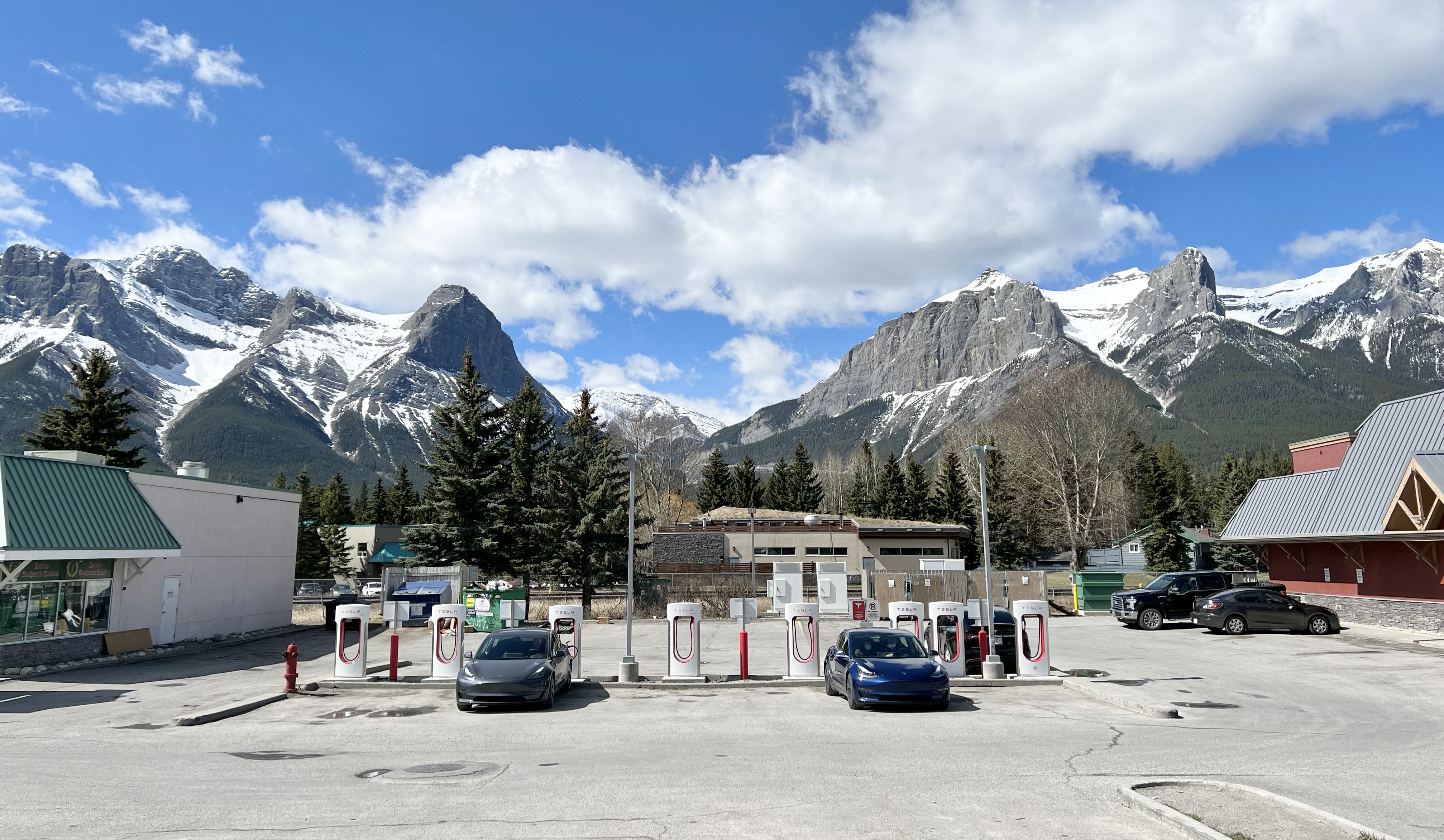
Tesla Supercharger in Canmore, Alberta — Photo: Sharon Hahn Darlin / Wikimedia Commons (CC BY 2.0)
Key Topics
Three areas of EV charging infrastructure that affect Canadian drivers most directly: the charger standards in use, what home installation involves, and where public chargers are located.
Level 1, Level 2, and DC fast chargers each operate under different power levels and connector standards. The most common in Canada are J1772 for AC and CCS Combo 1 for DC fast charging.
Installing a Level 2 charger at home typically requires a dedicated 240V circuit, an electrical panel upgrade in some cases, and permits through the local utility or municipality.
Canada’s public charging network spans federal highway corridors through programs like the Zero Emission Vehicle Infrastructure, with uneven distribution between urban centres and rural areas.
Background
Canada’s charging network has expanded considerably since the federal government began investing in corridor infrastructure. The Zero Emission Vehicle Infrastructure Program (ZEVIP) has funded thousands of chargers across provinces and territories.
Hydro-Québec’s Circuit Électrique network is one of the largest single-operator networks in the country, concentrated in Quebec but extending to neighbouring provinces. In British Columbia, BC Hydro’s EV Fast Charging Network covers major corridors. ChargePoint, FLO, and Petro-Canada’s Electric Highway operate nationally.

Articles
Charger Standards
An overview of the three charging levels, the connector standards in use, and how each type fits into everyday charging patterns for Canadian EV owners.

Home Charging
What Canadian homeowners need to know about electrical panel capacity, permits, electrician requirements, and incentive rebates when adding a Level 2 charger at home.
Public Networks
How major charging networks are distributed across Canada, which provinces have the densest coverage, and where gaps remain on inter-provincial routes.
Contact
Nevermim.org compiles reference information about EV charging infrastructure in Canada. Content is drawn from publicly available government data, utility operator documentation, and industry standards.
For corrections or additions, use the form to the left.